Water
Questions to bring to a water consultation
Start with your water report and your goals, then ask what the test will show and what upkeep the system will need.
A water consultation should start with your questions, not a product. Maybe the water tastes off, leaves white crust on the faucets, or you simply want to know what is in it. Say that first. Any recommendation should trace back to what your water actually contains and what you want to change.
Here is what to bring, and what to ask once you sit down.
01Bring your water report
City water customers get a report from their utility every year, due by July 1. EPA's consumer page on these reports explains that each one names the water source, lists the regulated contaminants found and flags any health standard that was broken. If you cannot find yours, call the utility or use EPA's online lookup.
Bring it along, even if it reads like a lab sheet. It gives the conversation a baseline and helps separate real concerns from guesses. If you are on a private well, there is no utility report, so any past lab results become even more useful.
02Describe your goals
Be specific about what bothers you, and where you notice it:
- Taste or smell at the kitchen tap
- White scale on faucets, shower glass or inside the kettle
- Spots on dishes after the dishwasher runs
- A chlorine smell in the shower
- Simply wanting to know what is in your water
EPA's WaterSense guide recommends naming your treatment goals before picking a system, and notes that taste and smell are not dependable signs of water quality. As a rough rule, scale points toward hardness, which a softener deals with, while taste and odor point toward filtration.
03Ask what the test will show
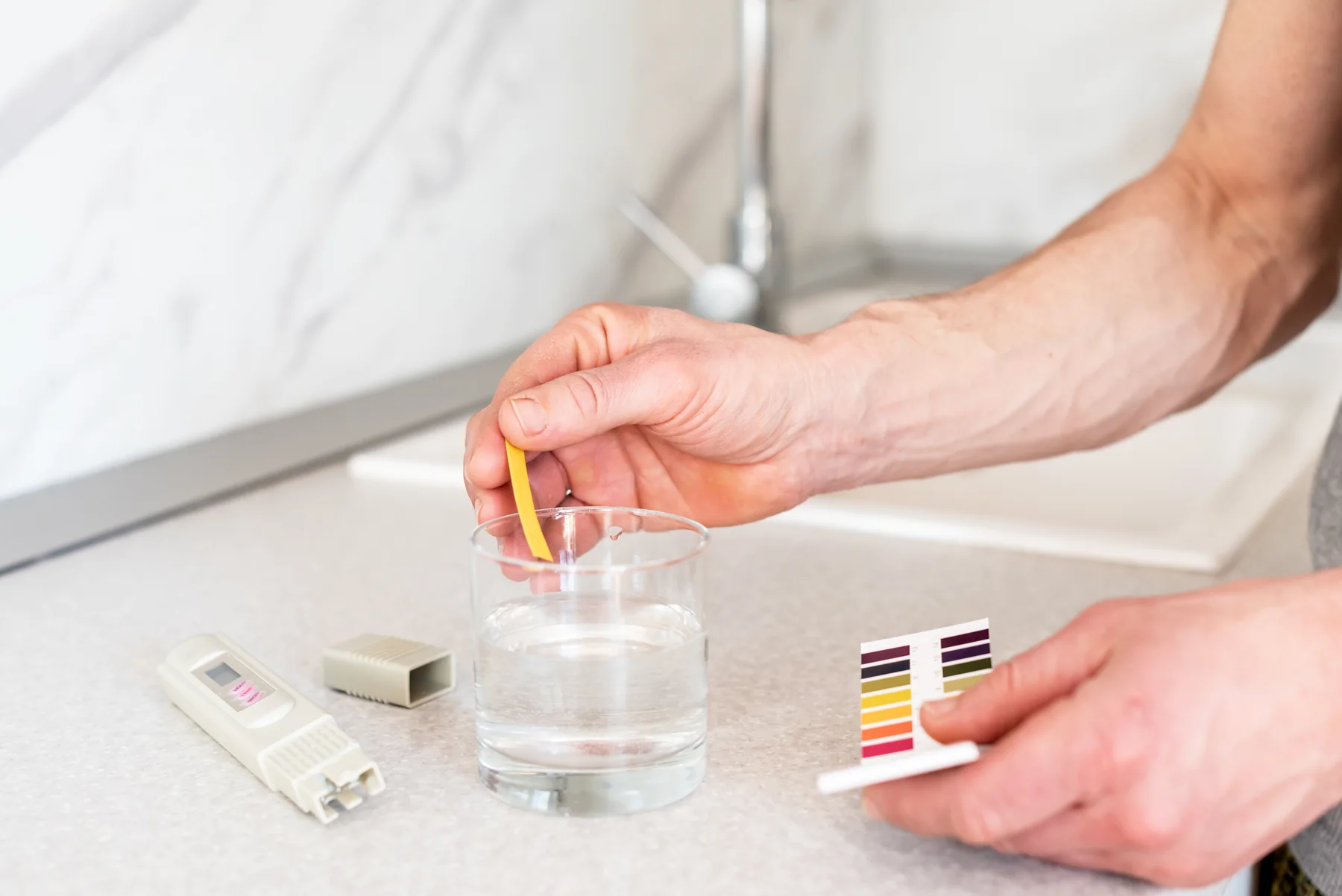
Ask what the test measures, and what it does not. A quick test at home can show things like hardness and chlorine. Some concerns call for a lab approved by the state, and EPA's guide points to those labs for well owners and anyone with a specific worry.
Questions worth asking:
- What does this test cover, and what are its limits?
- How do the results line up with my utility's report?
- Which result is the reason for each part of the system you are proposing?
The CDC adds that if testing turns up no harmful germs or chemicals, you might decide you do not need a filter. At Static we test at the free inspection, and if your water is fine as it is, we will say so.
04Ask which standard it meets
Home treatment products are checked against NSF/ANSI standards. Softeners fall under 44, taste and odor filters under 42, reverse osmosis units under 58, and filters that target certain health-related contaminants under 53. Ask which standard the system you are offered was tested to, and which contaminants it is listed for. You can check that yourself on NSF's online product search by brand or model.
A single unit can carry more than one standard when it combines steps, so ask which claim belongs to which part. A clear answer here tells you a lot about the person making the recommendation.
If you are weighing a whole-house system against one tap, our guide to whole-home filtration vs reverse osmosis compares the two side by side.
05Plan for upkeep and space
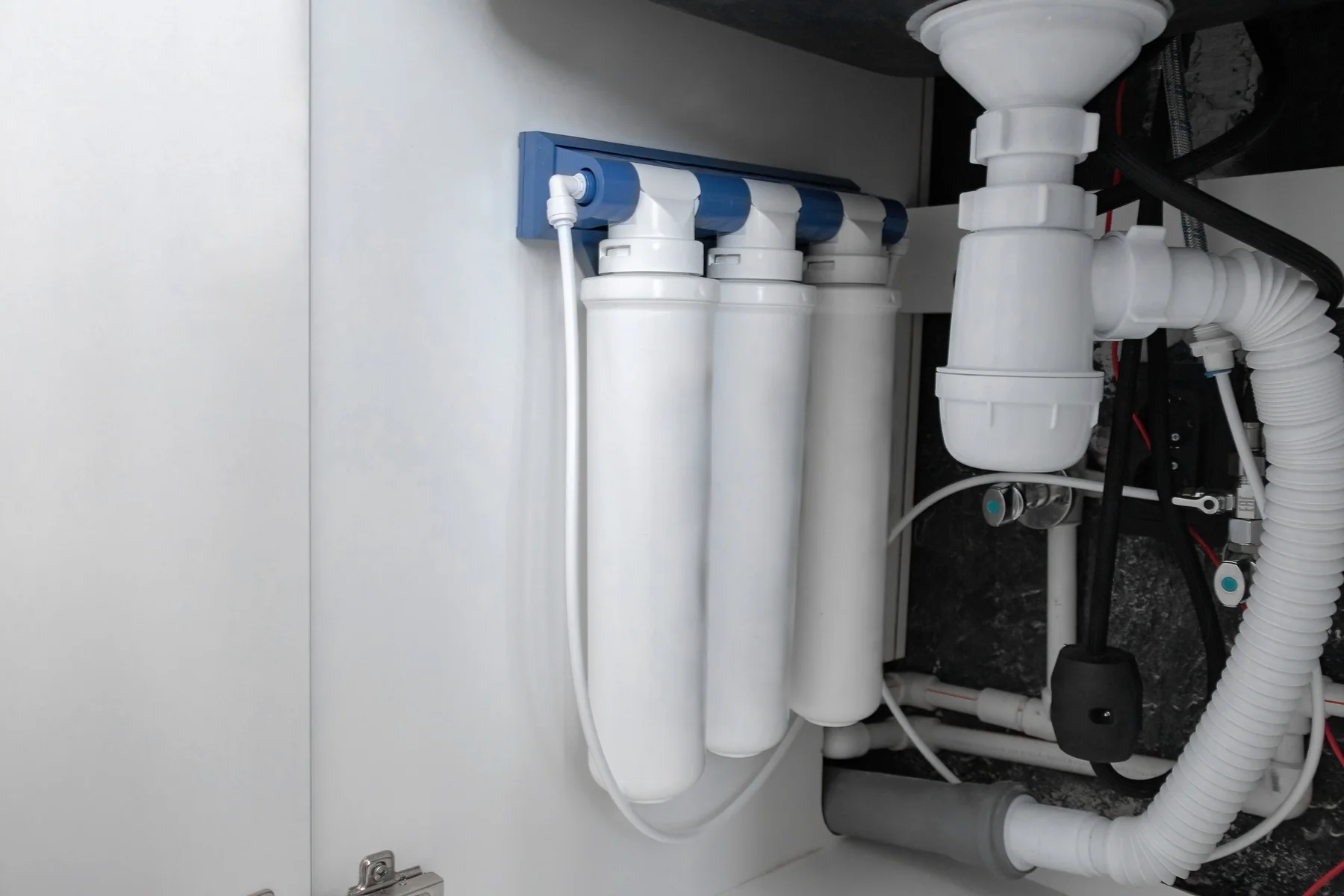
Every system needs care. EPA's guide warns that a system left without upkeep can end up hurting your water quality, and it says to follow the manufacturer's filter schedule. Ask:
- How often filters change, and what the replacements cost
- Who does the changes, and how you will be reminded
- Where the system goes, and whether it needs a drain or an outlet
- What, if anything, changes with your water pressure
We install whole-home filtration and softening at the main line, set the filter schedule when we install it, and the same crew comes back to change them. For an at-home water test, book a free inspection or call 800.781.7220.